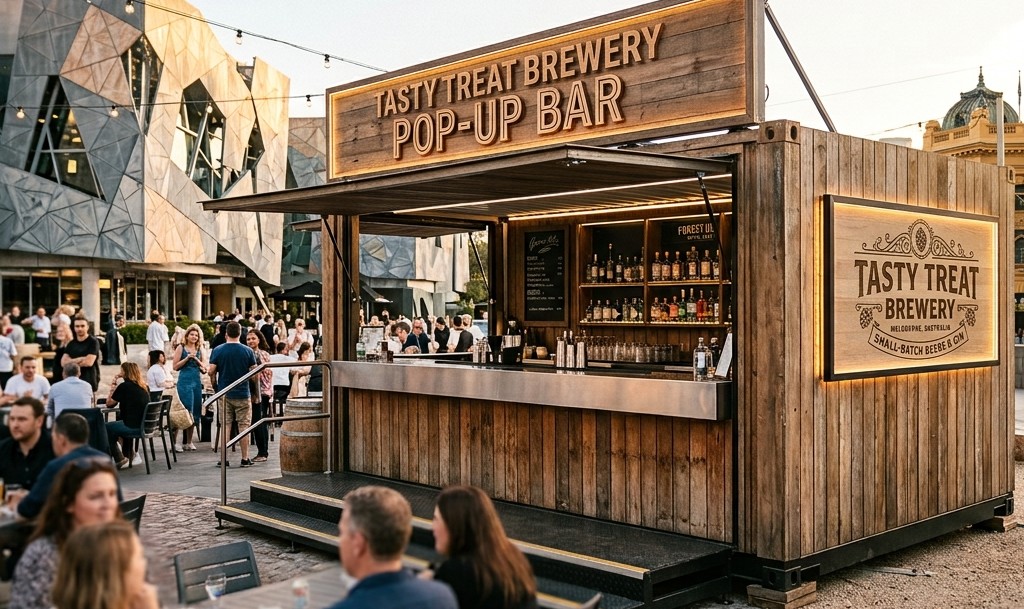
Three events a year and the numbers stop making sense. That’s roughly where the maths tips from hire to buy for most operators looking at a portable bar, though almost nobody arrives at that number by doing the sums first. They start by liking the look of one online, then work backwards into whether owning it makes sense.
A single portable bar hire in Melbourne typically runs somewhere between $400 and $900 a day depending on size and fit-out, delivery included. Do that four times a year and you’re at $3,600, conservatively. A custom-built bar, refrigeration and tap system included, lands somewhere between $12,000 and $25,000 depending on materials and complexity. Divide it out and the break-even sits around three to four years of moderate use. That’s the number that actually matters, not the sticker price on either option.
Storage Is the Cost Nobody Mentions Upfront
Buying a bar means owning something roughly the size of a shipping container for the eleven months a year it isn’t in use. That’s not a small ask. A lot of operators discover this after the purchase, not before, and end up paying for offsite storage that quietly erodes whatever they saved by not hiring. If you’ve got a yard, a warehouse corner, somewhere dry and secure, ownership starts looking a lot more sensible. If you don’t, that gap needs pricing in before anything else.
Hiring sidesteps this completely. The bar shows up, does its job, leaves. No maintenance between events, no worrying about finding a place to store a shipping container or having to ensure the contents remain secured.
Frequency Changes the Whole Equation
Here’s where it gets less obvious. A business running one flagship event a year, a brand activation or a product launch, almost never benefits from owning. The bar sits idle, depreciates, and ties up capital that could go toward the event itself. Hire, spend the saved capital on the activation, move on.
A hospitality group or an events company running six, eight, ten functions a year is a different story. At that frequency, a hired bar starts to feel like a subscription you can’t quite justify, and the case for owning gets stronger fast. Not just financially. Consistency matters too, when the same bar shows up looking and pouring exactly the way your brand needs it to, every time, rather than whatever’s available that week from a hire fleet.
Commercial operators, pubs and venues running a semi-permanent outdoor setup, tend to skip this calculation altogether and go straight to buying. Makes sense. A commercial portable bar isn’t an occasional prop for them, it’s fixed infrastructure that happens to be mobile.
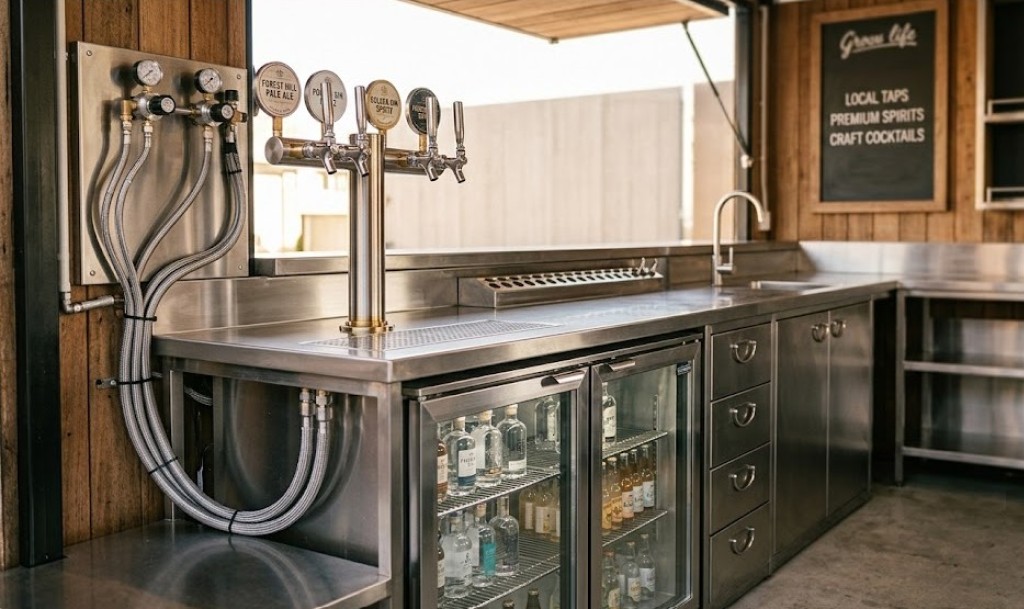
There’s also a customisation ceiling with hire. Rental fleets are built to suit the broadest range of clients, which means branding options are usually limited to wraps, signage, maybe a colour change. A custom portable bar for sale gets built to spec from the ground up: layout, materials, tap configuration, finish. If your brand identity is doing real work at the event, that difference shows.
The Middle Ground Gets Skipped Too Often
Buy-to-lease-back is worth a mention, even though almost nobody brings it up first. Some operators purchase a bar and then hire it out themselves between their own events, offsetting the ownership cost. It’s not for everyone. It adds logistics, insurance considerations, wear from users who aren’t your own staff. But for a business already running events semi-regularly, it can shift the break-even point considerably.
None of this settles into a clean rule. Frequency, storage, branding needs and how much control you want over the finished product all pull in different directions, and the honest answer for most businesses is they sit somewhere in between hiring and buying, rather than at either extreme. Talk it through with us before committing either way. The build spec changes depending on which path you’re on, and that’s not something worth guessing at.